



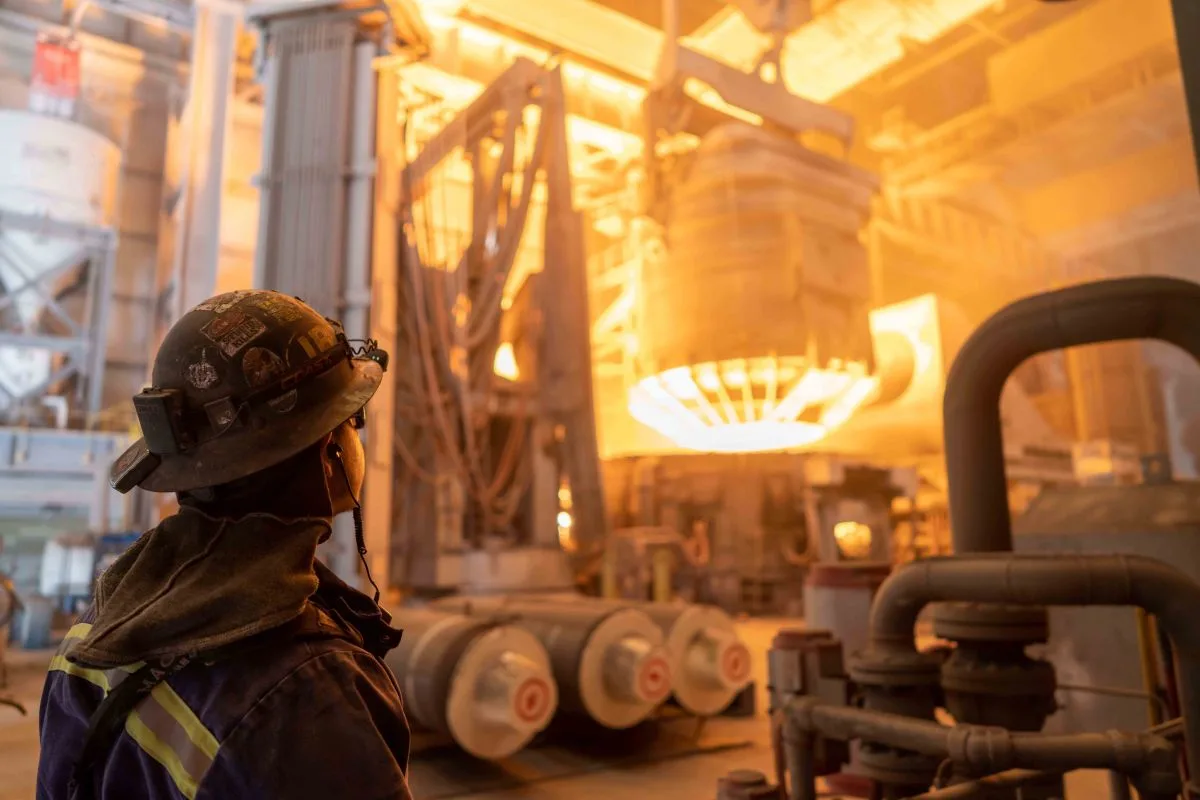
U. S. Steel invests $1.9 billion in a first-of-its-kind direct reduced iron facility at Big River Steel Works to strengthen efficiency and vertical integration.
U.S. STEEL ADVANCES NEXT-GENERATION PRODUCTION
U. S. Steel is reinforcing its commitment to modern, integrated steelmaking with a major new investment at its Big River Steel Works site in Osceola, Arkansas.
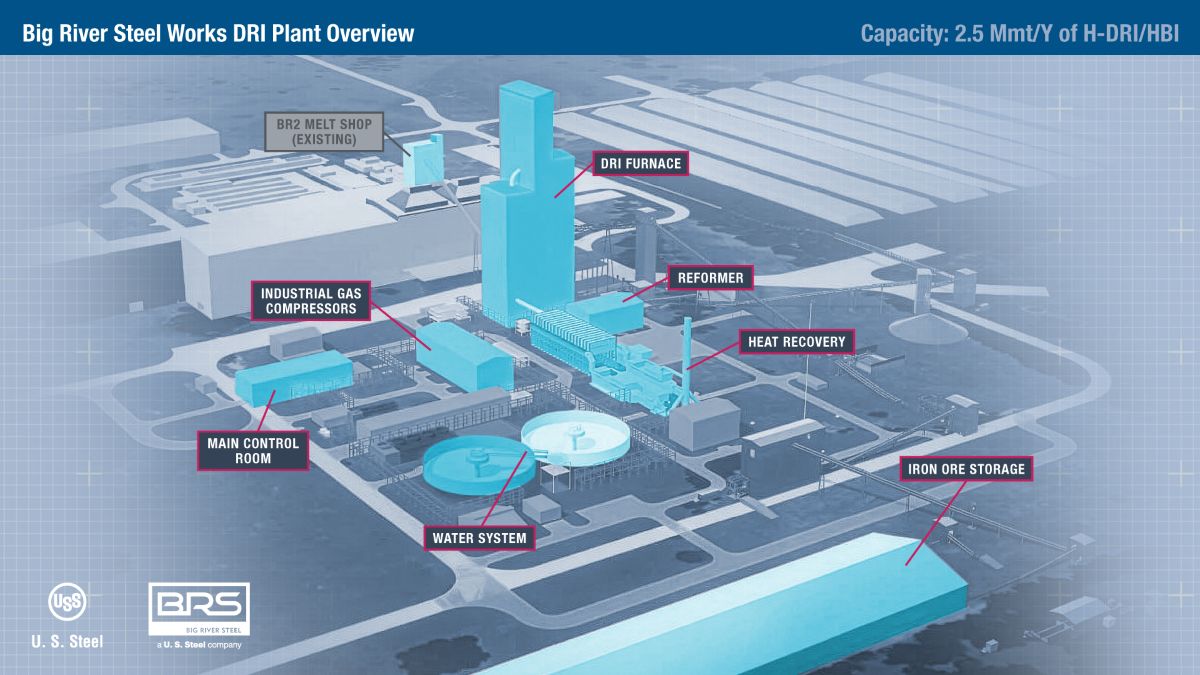
The sustainable steel solutions provider has announced plans to invest $1.9 billion into the construction of a direct reduced iron (DRI) facility – a project it describes as the first of its kind in the US.
Positioned as a key step forward in its technological evolution, the development is set to strengthen U. S. Steel’s next-generation production capabilities while enhancing efficiency and supply chain control.
BUILDING A CONNECTED VALUE CHAIN
Central to the project is the creation of a fully integrated production pathway, linking raw material extraction through to finished steel.
The facility will draw on the company’s direct reduced-grade pellet capabilities at its Minnesota Ore Operations, forming a continuous connection between mining, feedstock production for electric arc furnaces (EAF), and final steelmaking at Big River Steel Works.
By locating DRI production on-site, U. S. Steel eliminates the need to transport material to the Arkansas facility. This not only streamlines operations but also provides a competitive sourcing advantage for feedstock, particularly as the Big River 2 expansion – valued at more than $3 billion – is now fully operational and supported by four EAFs.
Collectively, these investments are designed to improve consistency, quality, and reliability for customers while reinforcing a more resilient domestic supply chain.
DRIVING EFFICIENCY AND SCALE
The move reflects U. S. Steel’s broader strategy of vertical integration, bringing multiple stages of production under a unified system.
“From iron ore in Minnesota to steel production in Arkansas, this $1.9 billion investment strengthens our ability to create steel that is truly mined, melted, made in America, from start to finish,” comments U. S. Steel President and CEO David B. Burritt.

“By vertically integrating DRI production directly at Big River Steel Works, we enhance efficiency, secure our competitive advantage, and position U. S. Steel for long-term success. Our partnership with Nippon Steel helped accelerate this investment years sooner than would have otherwise been possible.”
Through this approach, the company aims to optimize operational performance while maintaining greater control over its end-to-end production lifecycle.
ECONOMIC IMPACT AND JOB CREATION
Beyond operational gains, the project is expected to deliver a meaningful boost to the regional economy.
Once complete, the facility will support approximately 200 full-time roles at Big River Steel Works, alongside 35 embedded contractor positions. During peak construction, employment is projected to reach around 2,000 jobs.
This combination of long-term employment and short-term construction activity underscores the wider economic contribution of the investment, both locally and across the broader US manufacturing landscape.
POSITIONING FOR THE FUTURE
Founded in 1901, U. S. Steel continues to evolve its operations in line with shifting industry demands, focusing on sustainable and high-value steel solutions across sectors including automotive, construction, energy, and packaging.
With this latest investment, the company is further aligning its infrastructure with advanced steelmaking technologies, reinforcing its position within an increasingly competitive and innovation-driven market.