



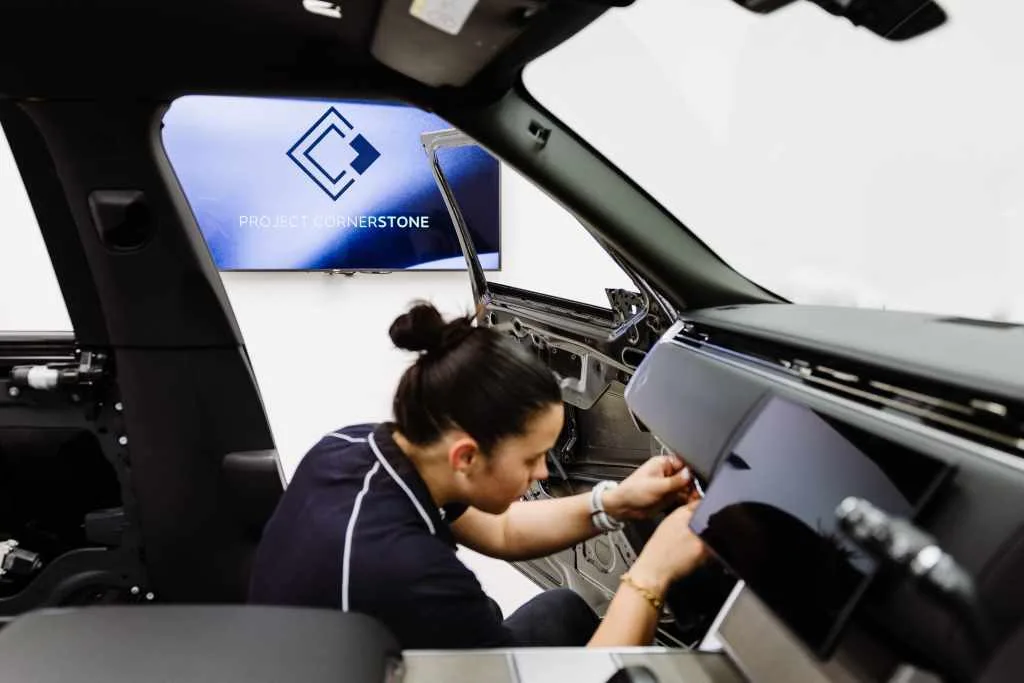
JLR has unveiled a circular concept vehicle developed with more than 40 suppliers, showcasing how recycled materials, low-carbon components and design-for-recycling can advance automotive sustainability goals.
What is Cornerstone?
JLR’s newly unveiled Cornerstone concept vehicle illustrates what that transition could look like in practice.
Developed alongside more than 40 Tier 1 and raw material suppliers, the initiative demonstrates how automakers can embed circularity into vehicle development from the earliest stages—reducing carbon emissions, increasing recycled content and improving the ability to repair, recover and reuse valuable materials.
Rather than a distant concept, the project uses real components and technologies that could inform future production programmes.

Moving Circularity from Strategy to Engineering
The automotive industry has spent years discussing circular economy principles. The challenge has been translating those ambitions into commercially viable engineering solutions and Cornerstone attempts to bridge that gap.
JLR collaborated across its supply network to create 49 more sustainable automotive components, focusing on three objectives :
- Maximising recycled materials
- Increasing the use of bio-based and lower-impact inputs
- Designing components to enable easier repair, disassembly and recycling
The result, according to JLR, delivered more than one tonne of CO₂e savings compared with existing materials and processes, while incorporating almost 140kg of additional recycled material.
By integrating these solutions into a real vehicle bodyshell, the project provides a practical testbed for technologies that could transition into future production vehicles.

Supplier Collaboration Emerges as a Critical Lever
One of the strongest themes emerging from the initiative is the importance of early supplier engagement.
Rather than treating sustainability as a downstream procurement exercise, JLR involved partners throughout development.
The approach reflects a broader shift underway across manufacturing industries, where emissions reductions increasingly depend on collaboration beyond organisational boundaries.
According to the release, suppliers worked alongside JLR’s engineering and industrial operations teams to co-develop solutions spanning multiple material categories and systems.

Key project outcomes:
- 100% closed-loop recycled glass
- De-bondable electronics designed to improve repairability and recyclability
- Speaker systems incorporating 95% recycled magnets
- Lower-emission steel applications
- Recycled seat foam technologies
- FlexAir seat technology
- New headlamp innovations
Several of these technologies are already planned for future JLR vehicle programmes.

Designing for Resource Resilience
While decarbonisation often dominates sustainability conversations, resource security is becoming an equally significant concern.
Material supply disruptions, geopolitical uncertainty and growing demand for critical inputs are prompting manufacturers to rethink how products are designed and sourced but Cornerstone addresses these challenges by improving material recovery and extending component life.
The emphasis on repairability and recyclability could help manufacturers reduce dependence on virgin resources while improving resilience against future supply constraints.
Industry Firsts Demonstrate What’s Possible
Among the project’s most notable achievements are several technologies described as ‘industry firsts’.
- 100% closed-loop recycled glass, delivering a 36% reduction in CO₂e
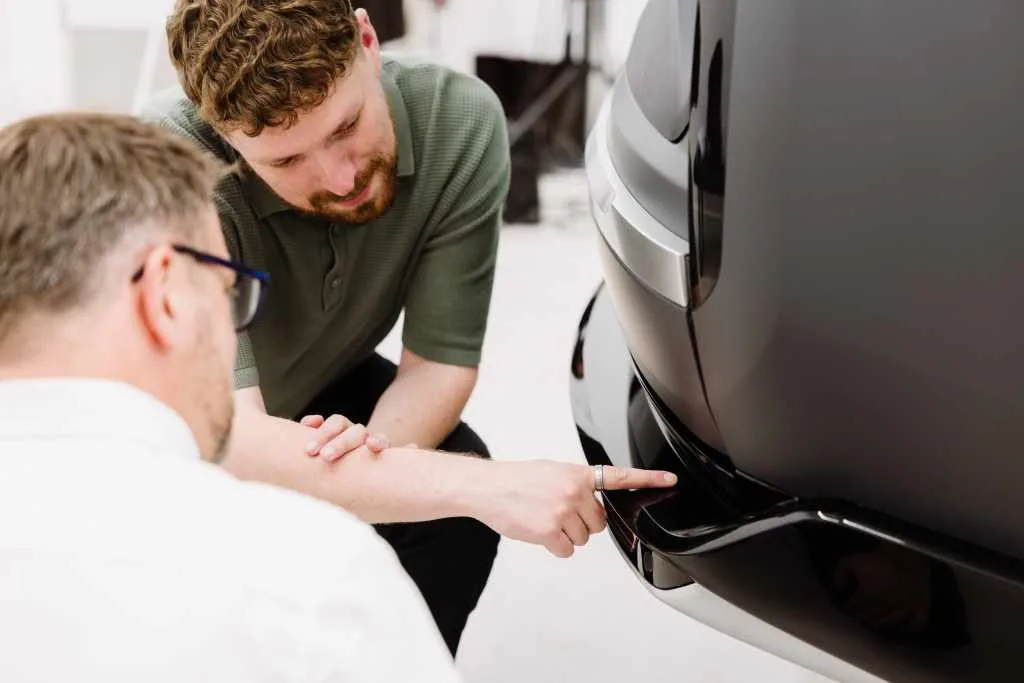
- De-bondable electronics, enabling headlamp repair and recycling
- 95% recycled speaker magnets
These innovations target areas that have traditionally proven difficult to address within circular economy strategies and by focusing on practical applications rather than theoretical possibilities, the project highlights how incremental advances across multiple components can collectively generate meaningful impact.

Circularity as an Economic Opportunity
The business case for circularity is increasingly tied to competitiveness and as regulations evolve and customer expectations rise, manufacturers that can secure material flows, lower embedded emissions and recover value from products at end of life may gain strategic advantages.
JLR Senior Manager Circularity Paul Francis highlighted the importance of coordinated action across the value chain.
“What we’re achieving with Cornerstone shows how JLR can lead in advancing circularity across the automotive industry, and the value of a coordinated, multi-party approach to deliver progress faster.”
“When we engage early on shared goals and each partner in the value chain brings their expertise collaboratively throughout development, production efficiency and overall outcomes improve significantly. This is how real, honest progress is made, and how the economic opportunity of circularity can be realised.”
Building the Foundations of Circular Manufacturing
JLR says innovations emerging from its Circularity Lab will continue feeding into Cornerstone as new solutions mature.
The programme explores methods to improve how end-of-life vehicles are dismantled and how components can be reused, repaired and recycled more effectively.
The company also recently joined the Global Impact Coalition’s Automotive Plastics Circularity Project, which aims to improve recycling pathways for automotive plastics used throughout vehicles.
Together, these initiatives suggest that circularity is becoming embedded across the automotive product lifecycle—from design and sourcing through to recovery and remanufacturing.
“I was privileged to hear about this trailblazing project from Jaguar Land Rover on a recent visit to their design HQ at Whitley in Coventry,” said Mary Creagh MP CBE Minister for Nature.
“It shows how industry can innovate with government providing a stable policy and investment framework. We must build a resource resilient economy, where waste is designed out and the cars of the future are built to last. Our upcoming Circular Economy Growth Plan will set out how we will support this green growth in every nation and region.”

This article was produced by the editorial team at Supply Chain Outlook and published as part of the Outlook Publishing global network of B2B industry magazines.
Outlook Publishing delivers industry insights, company stories, and sector coverage across supply chains, manufacturing, mining, construction, healthcare, food production, and sustainability.
Supply Chain Outlook provides ongoing coverage of organisations and developments shaping the global logistics and supply chain sector.