



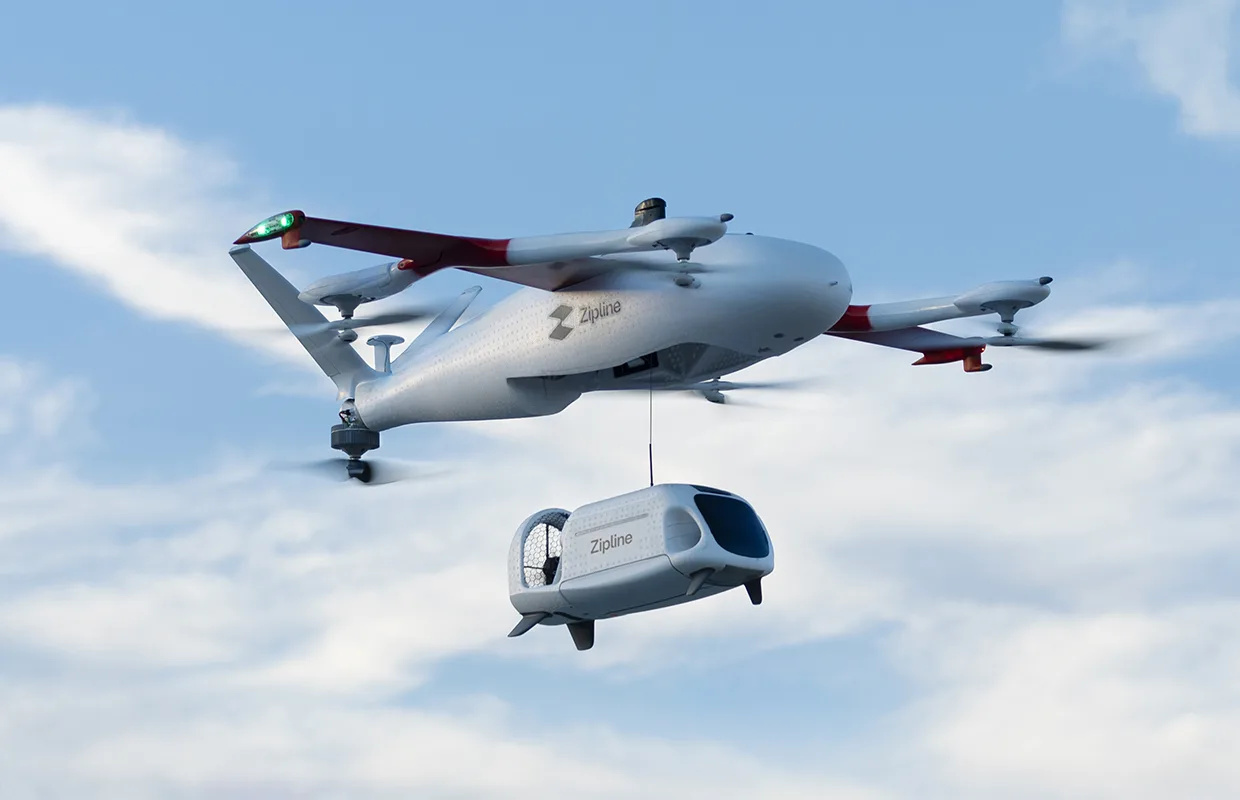
Rwanda is to become the first country in the world with nationwide autonomous delivery, including Africa’s first urban drone delivery network. We learn about this historic expansion agreement with Pierre Kayitana, Country Director of Zipline Rwanda.
AUTONOMOUS DELIVERY ACROSS RWANDA
A decade ago, Rwanda became the first country in the world to launch Zipline’s national autonomous medical delivery service.
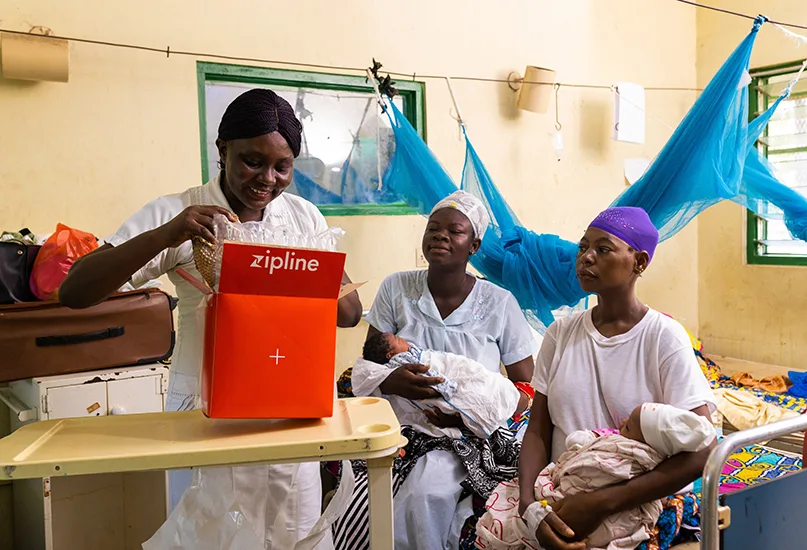
Zipline, an artificial intelligence (AI) and robotics company, designs and operates autonomous logistics systems that enable on-demand delivery of blood, vaccines, and essential medicines, fully integrated into national health systems.
In Rwanda, the network supports nationwide coverage and has contributed to improvements in access to healthcare, including a reported 51 percent reduction in maternal deaths.
Now, under a historic expansion agreement between the government and Zipline, Rwanda will also become the first country with full nationwide autonomous logistics coverage.
It will deploy Zipline’s urban delivery system, known as Platform 2 (P2), starting in the capital, Kigali, where a large share of the country’s healthcare demand is concentrated.
“In addition, Rwanda will host Africa’s first AI and robotics testing and research centre, strengthening its position as a leader in advanced technology and innovation on the continent,” acclaims Pierre Kayitana, Country Director of Zipline Rwanda.
“The expansion also includes the construction of a third long-range distribution hub in Karongi, complementing existing hubs in Muhanga and Kayonza.”
The network will support approximately 350 local jobs and further integrate delivery data into Rwanda’s national health information and emergency response systems.
Importantly, the model reflects a strong government-led approach. The US government is providing upfront infrastructure funding, whilst the Rwanda government is committed to financing ongoing operations.
“This ensures the system is financially sustainable, nationally operated, and embedded within Rwanda’s broader strategy for resilient, technology-driven healthcare,” Kayitana affirms.
ADVANCED LOGISTICS LEADER
By scaling what began as an innovative pilot into permanent national infrastructure, Rwanda has cemented its position as a global leader in advanced logistics.
What started as a targeted effort to improve access to blood in a handful of hospitals has evolved into a nationwide autonomous delivery network embedded in the public health system.
“Today, Zipline is responsible for delivering approximately 75 percent of Rwanda’s national blood supply outside of Kigali,” highlights Kayitana.
This next phase goes further; by hosting Zipline’s first overseas R&D hub, Rwanda is positioning itself not only as a user of frontier technology, but as a place where the next generation of AI, robotics, and autonomous logistics systems will be developed. In doing so, the country is helping shape the future of global supply chains.
A decade of operational data shows the tangible impact of this approach, as Zipline’s system has reduced medical waste by enabling centralised inventory and on-demand delivery.
It has also dramatically improved emergency response times for time-critical treatments such as blood for maternal haemorrhages.
This demonstrates that high-tech logistics can be both effective and economically efficient when deployed at national scale.
“Independent studies consistently find that Zipline’s network ranks amongst the highest-impact and most cost-effective health system interventions studied in recent years – improving outcomes across immunisation, maternal health, nutrition programmes, and emergency care whilst strengthening the reliability of national supply chains,” Kayitana highlights.
“Independent studies consistently find that Zipline’s network ranks amongst the highest-impact and most cost-effective health system interventions studied in recent years – improving outcomes across immunisation, maternal health, nutrition programmes, and emergency care”
Pierre Kayitana, Country Director, Zipline Rwanda
AUTONOMOUS DELIVERY SYSTEM
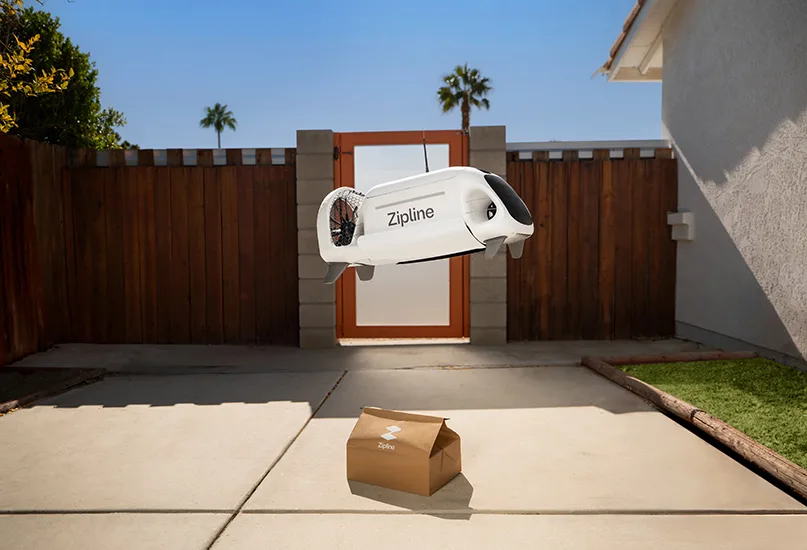
Zipline’s next-generation autonomous delivery system, P2, is designed for fast, quiet, and highly precise deliveries in dense urban environments.
Unlike earlier systems built primarily for long-range medical deliveries, P2 is designed to operate within cities, enabling items to be delivered directly to homes, hospitals, offices, and public spaces with very high accuracy.
“The system uses a new aircraft design with a smaller delivery droid that lowers packages gently to the ground, allowing for maximum accuracy, which makes it well-suited for urban settings like Kigali,” explains Kayitana.
This progress has been championed by Rwandan authorities, notably the Minister of Health, Dr Sabin Nsanzimana, who was recently named to the TIME100 Next list for his work in strengthening Rwanda’s health system through data-driven decision-making and innovation.
Under his leadership, Rwanda has benefitted from the impact of the integration of technology into healthcare delivery, allowing for improved and more reliable access to essential services.
The introduction of the urban delivery system in Kigali will address the high concentration of healthcare demand in the capital, enabling fast and precise deliveries within dense city environments.
“Introducing P2 in Rwanda means the country will be the first in Africa to deploy this type of urban autonomous logistics system,” Kayitana tells us.
“It will expand the range of deliveries that can be supported, improve response times in cities, and further integrate autonomous delivery into everyday healthcare and commercial logistics.”
“Introducing P2 in Rwanda means the country will be the first in Africa to deploy this type of urban autonomous logistics system”
Pierre Kayitana, Country Director, Zipline Rwanda
LONG-RANGE COVERAGE
The new long-range distribution centre in Karongi is built on the border between Rwanda and the Democratic Republic of the Congo (DRC), intended as a symbol of peace between the two countries.
Its overall goal is to expand delivery capacity, expected to serve approximately 200 health posts and 60 major health facilities, reaching more than 2.9 million people.
“Together with the other hubs, it will help deliver full nationwide coverage, allowing Zipline’s network to support more than 11 million people across Rwanda,” informs Kayitana.
The addition of a third hub guarantees the provision of long-range coverage across the country, ensuring even remote and hard-to-reach communities can receive critical medical supplies quickly.
By integrating this connected network into national health systems, Rwanda is building a logistics infrastructure that ensures essential medicines and supplies can reach communities quickly and reliably, regardless of location.
The new AI and robotics testing facility, meanwhile, will serve as Zipline’s first R&D hub outside the US.
“This facility will allow us to test our technology in a range of real-world conditions, including different climates and terrain, helping improve the reliability and performance of aircrafts and systems globally,” Kayitana insights.
“It will also support the development of local talent by creating opportunities to work directly on advanced robotics and AI systems.”

INFLUENCE BEYOND LOGISTICS
Rwanda is demonstrating that autonomous delivery works at national scale, and in real-world conditions, as part of a government-led system.
“Independent research has increasingly validated the transformative power of this system, demonstrating that its influence extends far beyond mere logistics,” notes Kayitana.
“By optimising the delivery of critical goods, it has fundamentally reshaped supply chain efficiency – drastically reducing waste and theft whilst virtually eliminating the risk of stockouts.”
The impact on public health is even more profound, representing some of the most significant outcomes ever documented through a supply chain intervention.
Data confirms a staggering 56 percent reduction in maternal mortality and a 42 percent decrease in zero-dose prevalence.
Zipline is the most cost-effective immunisation intervention and one of the most cost-effective maternal health interventions on record.
Beyond these clinical milestones, the system serves as a powerful engine for economic stability.
“By creating hundreds of local jobs and safeguarding the health of the workforce, it generates tens of millions in annual economic growth, proving that a resilient supply chain is the essential foundation for a thriving society,” Kayitana closes.
This article was produced by the editorial team at Supply Chain Outlook and published as part of the Outlook Publishing global network of B2B industry magazines.
Outlook Publishing delivers industry insights, company stories, and sector coverage across supply chains, manufacturing, mining, construction, healthcare, food production, and sustainability.
Supply Chain Outlook provides ongoing coverage of organisations and developments shaping the global logistics and supply chain sector.