


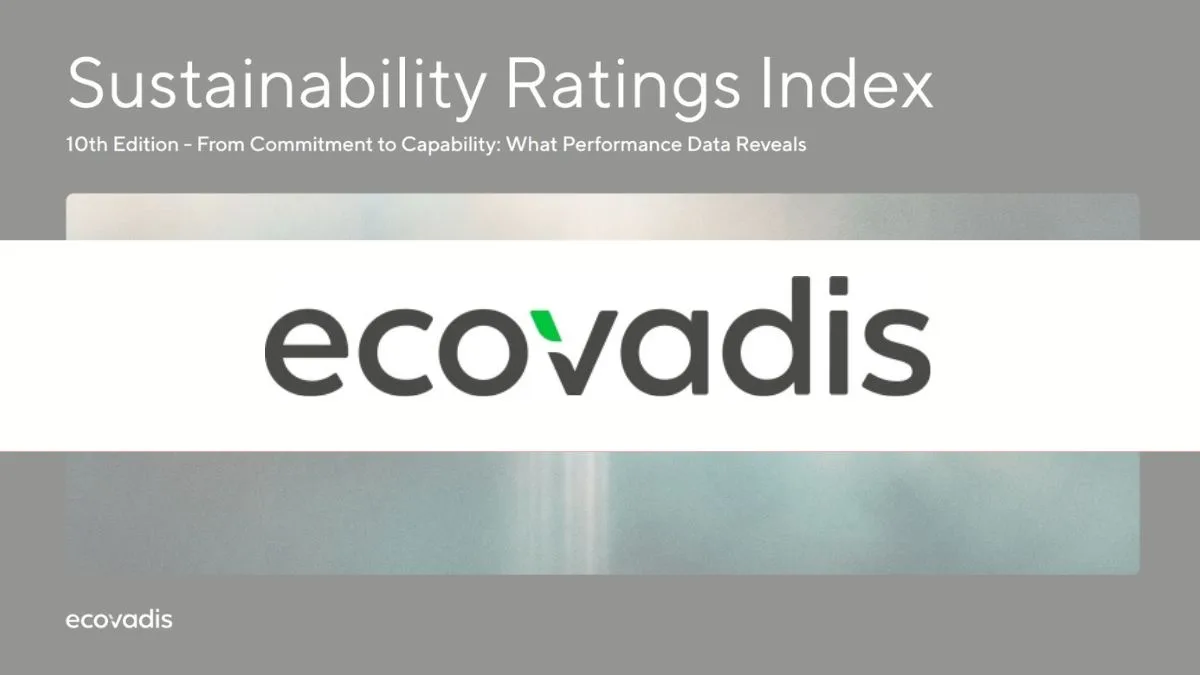
An EcoVadis report suggests that while many tier 1 suppliers are improving their sustainability performance, most have yet to extend those practices into their own supply chains. The findings indicate that limited visibility, weak supplier engagement and poor-quality sustainability data continue to constrain progress on climate action, human rights and sustainable procurement.
Tier 1 Progress Is Not Cascading Through Supply Chains
The 10th edition of the EcoVadis Sustainability Ratings Index, based on nearly 200,000 scorecards from more than 100,000 companies assessed between 2021 and 2025, found that sustainability improvements are largely concentrated within tier 1 suppliers.
According to the report, 80 per cent of rated companies have no documented process for identifying or managing sustainability risks within their own supply chains. In addition, 73 per cent do not report upstream Scope 3 emissions, while 77 per cent have no downstream emissions tracking.
The report also found that only 2 per cent of companies provide an external grievance mechanism that workers deeper in the supply chain can use to report human rights concerns, while fewer than 1 per cent share detailed, decision-grade sustainability data with buying organisations.
Climate and Human Rights Performance Continues to Improve
Despite the challenges further down the supply chain, the report identifies continued progress within suppliers’ own operations.
Environmental performance recorded the largest improvement of the four themes assessed, with average scores increasing by 9.6 points between 2021 and 2025. The proportion of companies achieving Advanced+ status, with scores of 65 or above on the EcoVadis 0-100 scale, increased from 17 per cent to 38 per cent over the same period.
Climate action also continued to develop, with 46 per cent of rated suppliers purchasing or generating renewable energy and 38 per cent providing climate training for employees. However, the report found that 78 per cent of companies have not established science-based carbon reduction targets.
Labour and Human Rights remained the highest-scoring theme, with an average global score of 59.5. According to the report, 80 per cent of companies have formal diversity, equity and inclusion (DEI) policies, while 78 per cent have employee health and safety policies in place.
Sustainable Procurement Remains a Weakness
EcoVadis found that supplier sustainability verification continues to rely heavily on documentation rather than direct assessment.
According to the report, 42 per cent of companies still depend on unverified supplier questionnaires, while only 46 per cent require suppliers to sign a sustainability code of conduct. Just 20 per cent conduct on-site supplier audits, a figure that has changed little over the past four years.
Supplier Data Quality Limits AI Adoption
The report also highlights the relationship between supplier data quality and the increasing use of artificial intelligence (AI) in sustainable procurement.
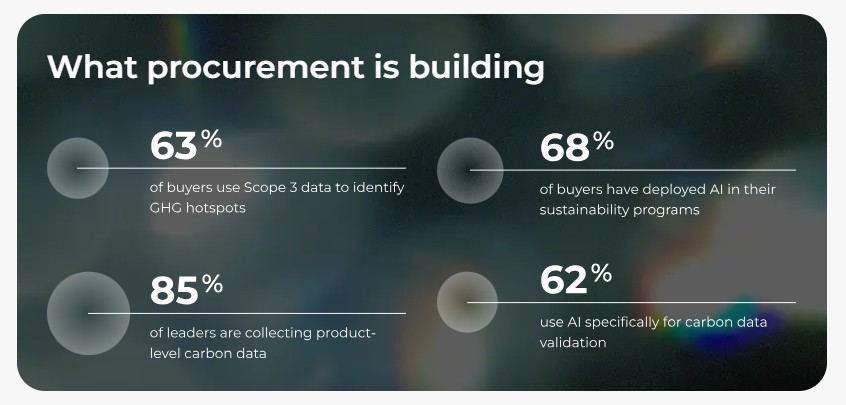
According to the accompanying EcoVadis Barometer 2026 report, 68 per cent of corporate buyers have deployed AI tools within their sustainable procurement programmes, with 62 per cent using them to validate carbon data.
However, supplier data remains a significant constraint. The report found that 30 per cent of suppliers provide no carbon data, while a further 26 per cent submit only aggregated estimates.
“Organisations have built sophisticated tools to analyze supplier sustainability data. The suppliers either don’t have that data or can’t report it in a form the tools can use,” said Sylvain Guyoton, Chief Rating Officer, EcoVadis. “Better software does not close that gap. The measurement problem lives in the supply base itself, and closing it requires sustained engagement over time: structured assessment, scored performance, and documented follow-through.”

Long-Term Supplier Engagement Improves Performance
The report suggests that sustained supplier engagement can significantly improve sustainability performance.
Across company sizes and sectors, organisations that had received multiple EcoVadis ratings scored an average of 63.2, compared with 51.5 for companies being assessed for the first time, representing an average improvement of 12 points.
“Companies willing to treat supplier engagement as an ongoing process, rather than a one-time compliance exercise, close the distance between what they intend and what they can actually verify,” added Sylvain Guyoton.
This article was produced by the editorial team at Supply Chain Outlook and published as part of the Outlook Publishing global network of B2B industry magazines.
Outlook Publishing delivers industry insights, company stories, and sector coverage across supply chains, manufacturing, mining, construction, healthcare, food production, and sustainability.
Supply Chain Outlook provides ongoing coverage of organisations and developments shaping the global logistics and supply chain sector.