



PepsiCo’s latest APAC Greenhouse Program is designed to move promising sustainability-focused start-ups beyond pilots and into commercial deployment across its supply chain.
A SHIFT TOWARD SCALABLE INNOVATION
PepsiCo is evolving its approach to corporate innovation in Asia Pacific (APAC) with the launch of the 2026 edition of its Greenhouse Program APAC: The IMPACT Edition.
Moving beyond pilot-led experimentation, the initiative is designed to fast-track proven start-up solutions into PepsiCo’s supply chain through a more structured and commercially focused integration model.
Now in its fourth year across APAC, the program has already facilitated more than 22 pilots involving over 30 start-ups, helping PepsiCo test emerging technologies and sustainability-driven innovations within its operations. The latest edition represents a strategic shift toward scaling solutions that have already demonstrated measurable potential within PepsiCo’s ecosystem.
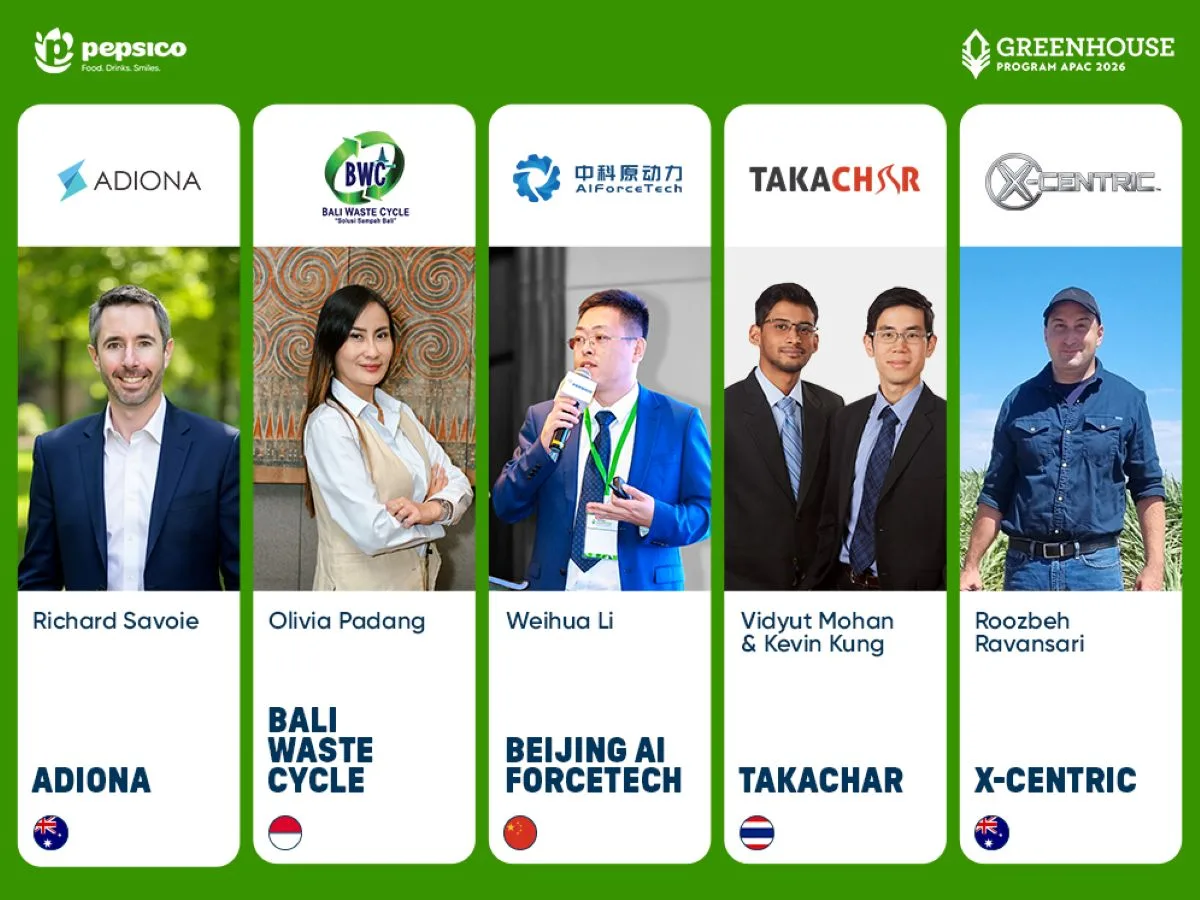
This year’s seven-month program brings together five alumni start-ups selected for their readiness to move toward operational deployment and commercial agreements. The chosen businesses align closely with PepsiCo Positive (pep+), the company’s end-to-end transformation agenda focused on sustainability, agriculture, climate, and circularity.
FROM PILOTS TO IMPLEMENTATION
The IMPACT Edition introduces PepsiCo’s new IMPACT Framework, which brings together teams from sustainability, procurement, supply chain, R&D, and operations much earlier in the process. Rather than evaluating projects sequentially, PepsiCo aims to align technical feasibility, commercial pathways, and operational priorities from the outset to reduce barriers to scale and accelerate implementation.
“In Asia Pacific, the next wave of competitive advantage will come from how quickly we can turn practical innovation into scaled commercial outcomes,” says Anne Tse, CEO, Asia Pacific, PepsiCo.
“Our priority is to focus on solutions that strengthen resilience in our value chain, accelerate execution in the market, and advance pep+ in ways that are measurable for both our business and our partners. This edition reflects a deliberate shift from exploring ideas broadly to backing the solutions most capable of creating strategic advantage across the region.”

The company’s latest approach reflects a wider trend among multinational organizations seeking commercially viable sustainability solutions that can be integrated more rapidly into existing operations.
By streamlining collaboration between internal stakeholders and startup partners, PepsiCo is aiming to shorten the path from innovation to measurable business impact.
START-UPS DRIVING SUSTAINABILITY
The five start-ups selected for the 2026 cohort represent a broad range of sustainability-focused technologies. Australia-based Adiona provides an artificial intelligence (AI)-powered logistics optimization platform designed to improve route planning and fleet efficiency.
Early deployments have achieved a 19 percent reduction in fleet distance traveled, supporting potential reductions in Scope 3 emissions across bottler networks.
Indonesia’s Bali Waste Cycle is focused on decentralized waste processing and the recovery of low-value plastics, while China’s Beijing AIForce Tech develops electric agricultural machinery to automate farming processes and reduce emissions.
Thailand-based Takachar converts crop residues into biochar to support soil health and carbon sequestration, and Australia’s X-Centric delivers digital soil analytics technology aimed at improving soil measurement and optimizing agricultural inputs.
BUILDING A STRONGER ECOSYSTEM
The broader ecosystem supporting the program has also expanded, with partners spanning venture capital, agriculture, and innovation. These include Artesian, AgFunder Asia, SAIL at Nanyang Technological University Singapore, AgriFutures growAG, Circulate Capital, GC Ventures, and CM Venture Capital. Together, they provide project support, market access opportunities, and potential investment pathways as solutions mature.
The program will conclude with a showcase event in Singapore this October, where participating start-ups will present progress against commercial and operational milestones to PepsiCo leaders, partners, and potential investors.
This article was produced by the editorial team at Supply Chain Outlook and published as part of the Outlook Publishing global network of B2B industry magazines.
Outlook Publishing delivers industry insights, company stories, and sector coverage across supply chains, manufacturing, mining, construction, healthcare, food production, and sustainability.
Supply Chain Outlook provides ongoing coverage of organisations and developments shaping the global logistics and supply chain sector.