




- Breaking down barriers to electrification
- Investment: Reducing costs for UK businesses
- Technology: Expanding Electric Fleet Capabilities
- What are the Zero Emissions Truck and Van grants?
- What is the UK Depot Charging Scheme (DCS)?
- Industry Impact: Driving growth and jobs
- Industry and Trade Association Lobbying
Breaking down barriers to electrification
Investment: Reducing costs for UK businesses
Aviation, Maritime and Decarbonisation Minister Keir Mather said:
“This £1 billion investment cuts cost for British businesses, supports jobs, cleans up our roads, and gives operators protection against shifting global fuel prices. The logistics sector is the backbone of the UK economy, worth £170 billion and supporting 2.7 million jobs. We’re helping them expand and decarbonise their fleets whilst saving them cash, driving growth up and down the country.”

Technology: Expanding Electric Fleet Capabilities
The funding supports adoption of electric vehicles and rapid charging infrastructure. Companies such as Wren Kitchens and Bedrooms have introduced 44-tonne e-trucks alongside charging facilities.
Lee Holmes, Transport and Logistics Director at Wren Kitchens and Bedrooms, said:
“Government investment gives businesses like Wren the confidence to accelerate fleet decarbonisation while maintaining operational stability, even in periods of economic uncertainty. With this support, we’ve brought a number of 44-tonne e-trucks into our fleet alongside a rapid charging infrastructure, reducing our reliance on traditional fuels and strengthening resilience and reliability against ongoing market volatility.”

Julian Bailey, Head of Group Transport at M&S, added:
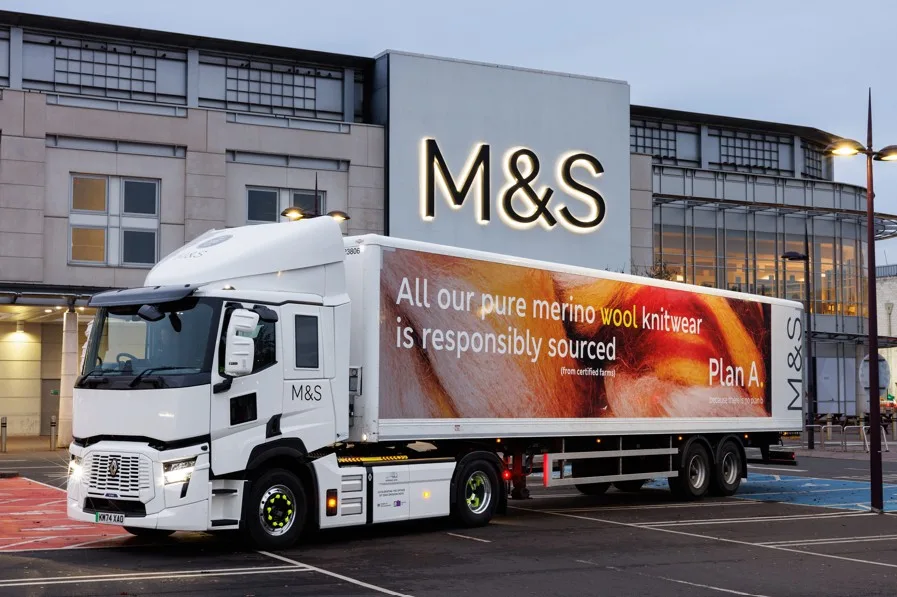
“In 2021, we set ourselves the ambitious target of becoming a net zero business across our value chain by 2040. Since then, we’ve made some great progress, which includes the onboarding of 24 battery electric vehicles across our transport fleet. We welcome this investment which serves as a reminder of the importance of the logistics sector in the UK and its role in decarbonisation.”
What are the Zero Emissions Truck and Van grants?
The Zero Emissions Truck and Van grants reduce the upfront cost of electric vehicles:
- Truck grant: Up to £81,000 off the heaviest zero-emission trucks (up to 40% of the cost)
- Van grant: Up to £5,000 off electric vans
These grants tackle one of the biggest barriers to fleet electrification: the high initial cost of vehicles.
What is the UK Depot Charging Scheme (DCS)?
The Depot Charging Scheme (DCS) helps businesses and public authorities install charging infrastructure for vans, coaches, and electric HGVs. Funding covers up to 70% of costs, supported by a £170 million government investment.
Toby Poston, Chief Executive of the BVRLA, said:
“The Depot Charging Scheme is playing a vital role in helping fleet operators and rental companies to install affordable, reliable charging infrastructure at their depots. The vehicle rental sector faces one of the most challenging paths to decarbonisation, and this additional support for depot charging will play a major role in building confidence. It will encourage more rental operators – particularly SMEs – to electrify at scale, reduce costs, and contribute to the UK’s net zero goals.”

Industry Impact: Driving growth and jobs
The funding follows an £18 million uplift in January to further reduce costs for green lorries. Companies such as M&S and Wren Kitchens and Bedrooms have leveraged these grants to decarbonise fleets and reduce operational costs.
The government also supports wider EV adoption through the Electric Car Grant, which has helped over 80,000 drivers save up to £3,750. Over £600 million is being invested to expand charging infrastructure, building on more than 118,000 chargers already available nationwide.
By reducing costs and expanding charging access, the initiative strengthens business resilience while advancing the UK’s sustainability and net zero objectives.
Industry and Trade Association Lobbying
“For several years, EO Charging been lobbying the UK Government with our trade association partners (BEAMA and REA) to deliver a clear and consistent electrification strategy for fleets,” said Richard Earl, Director of R&D at EO Charging.
“This would then enable investors and operators to unlock the significant amounts of private investment required to decarbonise the transportation sector. Following on the commitment to the ZEV Mandate and the industrial strategy, today the UK Government has made another significant strategic step forwards to help the electrification of fleets by the announcement of £1b of funding.”

“EO Charging welcomes this significant boost from the UK Government. Our own research with Vanson Bourne shows that the tipping point of Total Cost of Ownership of a fleet has already tipped towards an electrified fleet. Therefore, with this additional funding available from the UK government, it is now clearer than ever that operating an electric fleet is not only good for the environment but it now makes compelling financial sense.”
“Many of our customers already reap the benefit of operating an electrified fleet – zero emissions, simpler maintenance and an overall better experience for the driver, passengers and other road users. With this additional funding, we now anticipate many more companies enjoying these benefits as well as improved financial performance.”