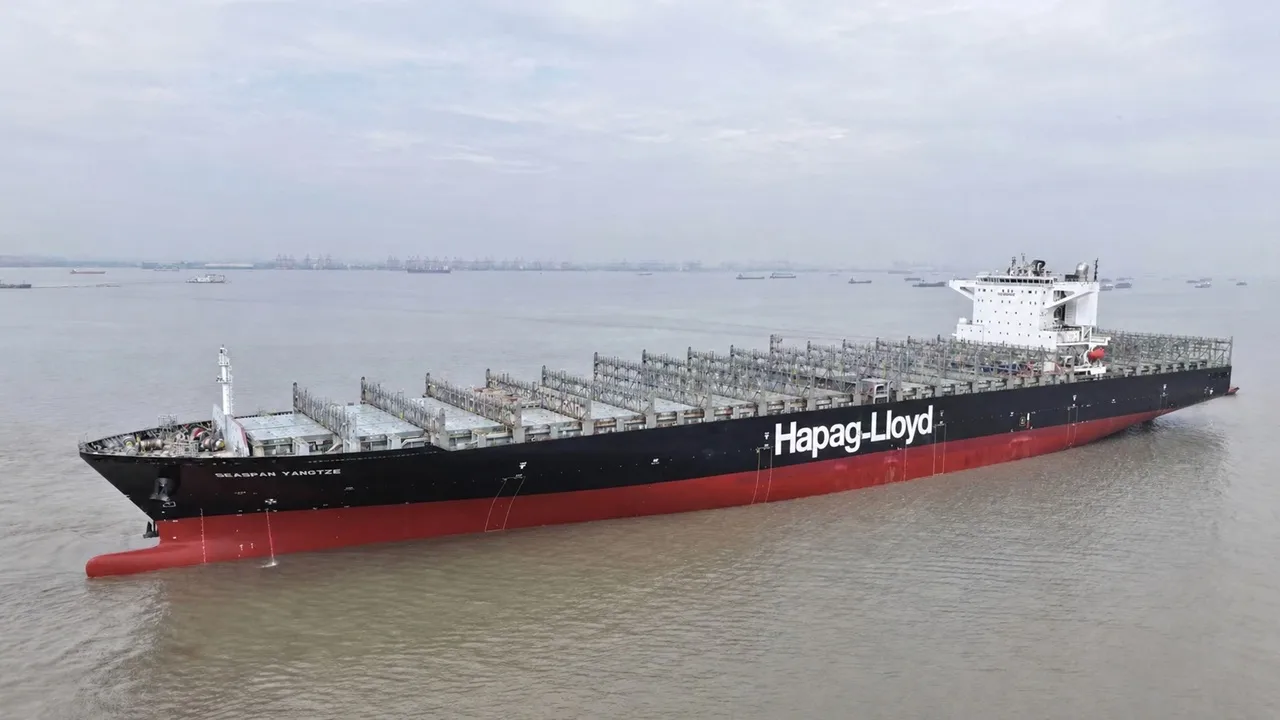
Hapag-Lloyd and Seaspan Corporation have completed the first methanol retrofit of a 10,100 TEU container vessel, marking a key milestone in a five-ship programme designed to increase fuel flexibility and support lower-carbon ocean transport.
Hapag-Lloyd and Seaspan Corporation have completed the first conversion under their joint methanol retrofit programme, upgrading the vessel Seaspan Yangtze to dual-fuel capability.
The retrofit, delivered in collaboration with Everllence, involved converting a conventional MAN S90 engine to enable operation on methanol, providing a pathway to reduced lifecycle emissions and greater fuel optionality across the fleet.
The Seaspan Yangtze is the first of five 10,100 TEU charter vessels included in the retrofit programme.
The remaining vessels in scope include Seaspan Amazon, Seaspan Ganges, Seaspan Thames and Seaspan Zambezi. The total investment across the five retrofits is estimated at approximately USD$120 million.
The programme represents a structured approach to fleet decarbonisation through the upgrading of existing assets, alongside broader investment in newbuild vessels and alternative fuel capability.
Once operating on low-carbon methanol, each converted vessel is expected to reduce CO2e emissions by approximately 30,000 to 50,000 metric tons per year.
In addition to emissions reduction potential, the retrofits are designed to extend the operational life of existing tonnage while increasing fuel flexibility across container shipping operations.
Silke Lehmköster, Managing Director Fleet at Hapag-Lloyd, said: “Retrofitting existing vessels is an important lever on our way to decarbonize our fleet operations by 2045. The successful conversion of the Seaspan Yangtze shows that technical innovation and close cooperation with strong partners can make proven vessels ready for the use of low-carbon fuels. For our customers, this is another concrete step towards more sustainable supply chains.”
The methanol conversion programme forms part of Hapag-Lloyd’s wider fleet decarbonisation strategy, which combines new vessel orders, dual-fuel retrofits, operational efficiency improvements and alternative fuel sourcing.
The company says that retrofitting existing ships plays a critical role in accelerating emissions reductions across the installed base while supporting longer-term fleet transition goals.
The completion of the first retrofit is intended to support more sustainable ocean transport options for global supply chains, particularly as cargo owners increasingly prioritise emissions visibility and Scope 3 reduction targets.
By enabling existing vessels to operate on alternative fuels such as methanol, the programme aims to provide additional flexibility in fuel sourcing while maintaining continuity of global liner services.
The retrofit was delivered through collaboration between Hapag-Lloyd, Seaspan Corporation and Everllence, highlighting the role of cross-sector partnerships in enabling maritime decarbonisation.
Coordinated investment in retrofits and dual-fuel technologies is becoming an increasingly important pathway for accelerating the transition to low-carbon shipping while maximising the use of existing fleet assets.