



Infios has launched Infios Archer, an AI-powered intelligence layer designed to connect enterprise systems, automate supply chain workflows and enable real-time operational decision making across order, warehouse and transportation management.
Automating Operational Decisions
Infios has introduced Infios Archer, a new intelligence layer designed to embed artificial intelligence (AI) directly into supply chain execution, enabling organisations to automate operational decisions and coordinate workflows across enterprise systems.
Infios Archer underpins its Infios AI platform by connecting systems, data and workflows to support what it describes as Intelligent Supply Chain Execution.
AI Embedded in Supply Chain Operations
The new platform is designed to move organisations beyond traditional systems of record by embedding AI directly into execution environments, allowing decisions to be made and acted upon in real time.
The technology has been developed to help supply chains respond more effectively to disruption, labour shortages and increasing operational complexity by reducing manual processes and improving operational continuity.
Eugene Amigud, Chief Innovation Officer at Infios, said: “Infios Archer represents a fundamental shift from systems of record to systems of action, connecting systems, creating shared operational context and autonomously executing decisions. Infios Archer is not AI layered on top of systems. It’s embedded inside execution, allowing it to sense, decide, act and learn dynamically. That’s what makes Intelligent Supply Chain Execution real: the ability to connect intelligence to action, instantly and at scale.”
What is Infios Archer?
Infios Archer is designed to operate across order management systems (OMS), warehouse management systems (WMS) and transportation management systems (TMS), creating a shared operational context and coordinating execution across supply chain functions.
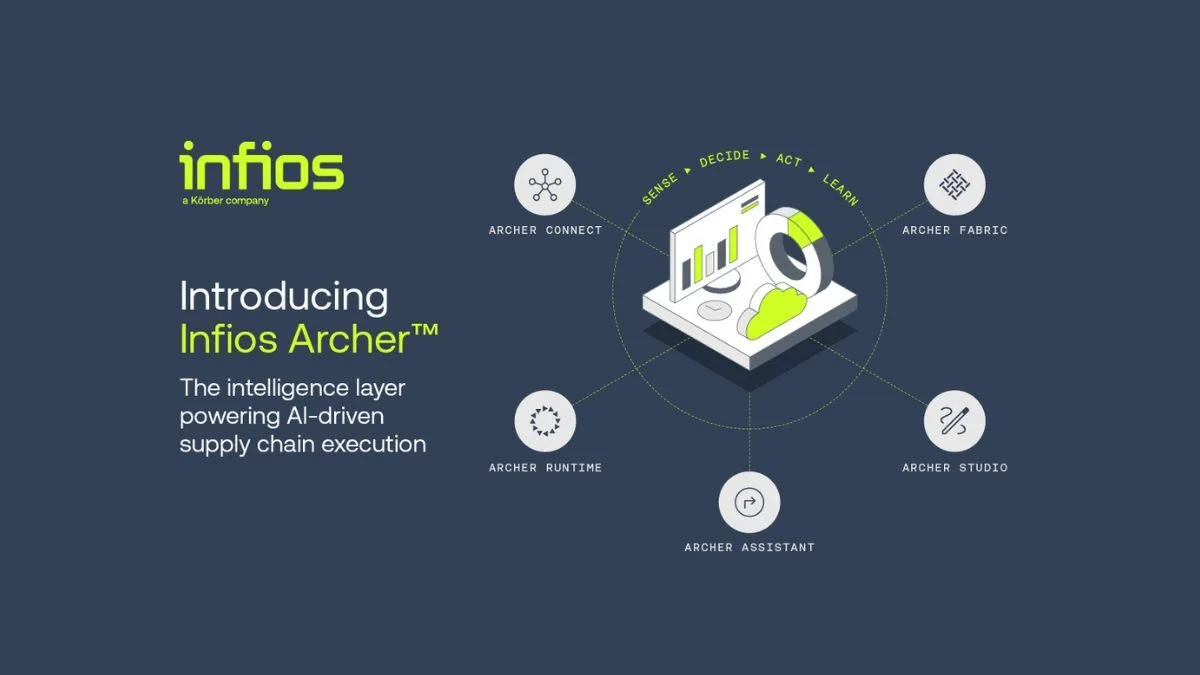
The platform comprises five core components:
- Archer Connect integrates data across enterprise systems, partners and formats and converts information into execution-ready workflows.
- Archer Fabric synchronises data across OMS, WMS and TMS platforms to establish a shared operational context.
- Archer Runtime coordinates and executes decisions while providing governance, auditability and operational traceability.
- Archer Studio provides a no-code environment for building and deploying agentic workflows with embedded controls.
- Archer Assistant delivers insights, recommendations and agent actions through a conversational AI interface.
The components are designed to create a continuous decision-action loop that connects intelligence with operational execution.
Early Supply Chain Applications
Infios said organisations are already using Archer to automate workflows including carrier communications, order processing, shipment tracking and exception management.
John O’Callaghan, Director of Information Technology at CJ Logistics America, said: “Infios AI is the first line of defense. It reaches out, calls the carrier, gets an update and if they don’t answer, it immediately follows up with an email. We’ve drastically reduced the number of follow-ups our operations folks have to do, which ultimately alleviates concerns around on-time delivery.”
The platform is intended to reduce manual workloads, accelerate response times and improve service reliability by acting as an always-on intelligence layer.
Supporting Intelligent Supply Chain Execution
Infios said Archer provides the technology foundation for Intelligent Supply Chain Execution by enabling orders, warehouses and transportation networks to operate as a connected ecosystem.
The company said embedding AI into execution workflows allows organisations to detect operational issues earlier, automate routine and exception-based decisions, coordinate actions across supply chain functions, reduce manual intervention, improve service reliability, and maintain governance, transparency and auditability.
The result is intended to be a continuous, real-time operations designed to help supply chains remain responsive and resilient during disruption.
This article was produced by the editorial team at Supply Chain Outlook and published as part of the Outlook Publishing global network of B2B industry magazines.
Outlook Publishing delivers industry insights, company stories, and sector coverage across supply chains, manufacturing, mining, construction, healthcare, food production, and sustainability.
Supply Chain Outlook provides ongoing coverage of organisations and developments shaping the global logistics and supply chain sector.