



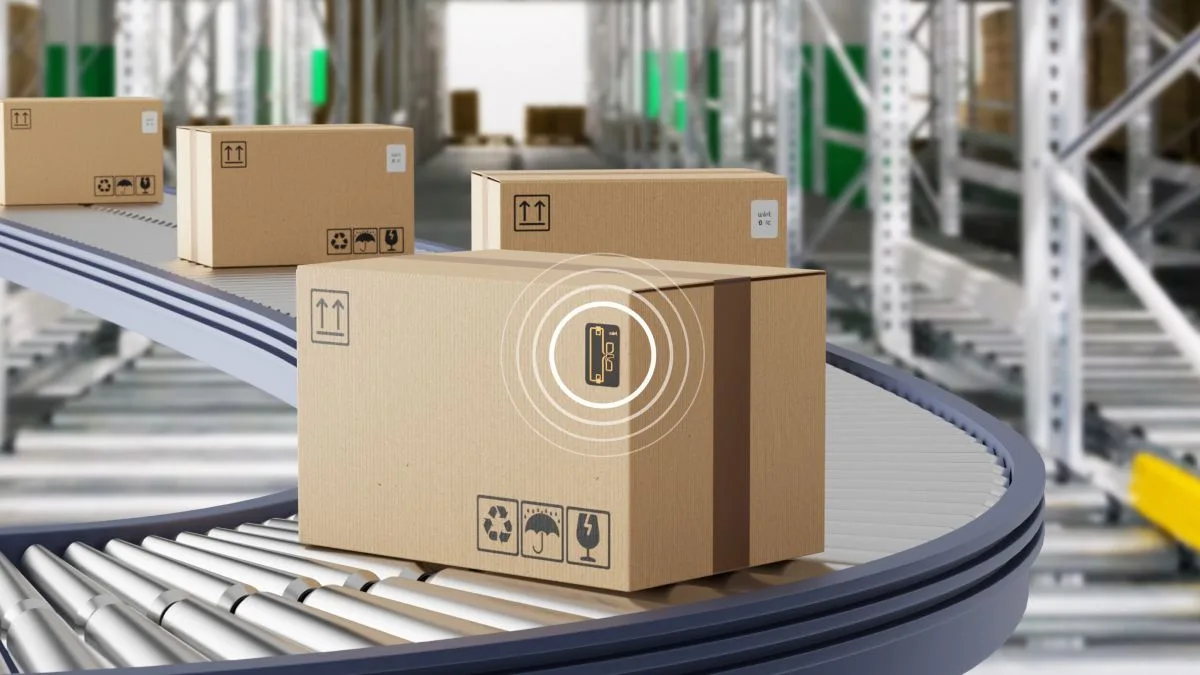
We speak with Amir Khoshniyati, Vice President at Wiliot, about the power of artificial intelligence when it comes to transforming supply chain visibility, enabling real-time decision-making, and bridging the gap between digital systems and the physical movement of goods.
TRANSFORMING EVERYDAY PRODUCTS INTO DATA SOURCES
As artificial intelligence (AI) becomes increasingly prevalent within supply chain operations, organizations are rethinking how decisions are made, executed, and optimized in real time.
From routing shipments to managing inventory and responding to disruptions, AI-driven systems are only as effective as the data they rely on.
However, traditional supply chain data models have long been constrained by limited visibility, capturing information only at fixed checkpoints rather than across a full journey.
This has often led to gaps between digital decision-making and real-world conditions, leaving organizations to operate in silos based on incomplete or outdated information.
Wiliot is addressing this challenge through its Ambient IoT solutions, which enable continuous, real-time visibility into the movement and condition of goods.
By transforming everyday products into data sources, the company is helping organizations bridge the gap between physical operations and digital intelligence.
Amir Khoshniyati, Vice President at Wiliot, explores how this approach is reshaping supply chain visibility, reducing operational risk, and laying the foundation for a new era of AI-driven logistics.

North America Outlook (NA): As AI-driven platforms begin to make more autonomous decisions within supply chains, why is maintaining real-time visibility within the physical movement of goods becoming increasingly important?
Amir Khoshniyati, Vice President (AK): AI systems are becoming deeply embedded in supply chain operations, from helping route shipments to prioritize inventory to responding to disruptions in real time.
But their effectiveness ultimately depends on the quality and timeliness of the data they receive.
Historically, most supply chain data has been transactional; systems capture information when goods are scanned at a checkpoint or logged at a warehouse, but everything that happens between those events is often inferred rather than directly observed.
Real-time visibility changes that dynamic. When goods continuously transmit signals about their location, movement, and condition, AI systems gain a clearer view of what is actually happening across the supply chain.
Instead of reacting after problems occur, organizations can detect emerging risks such as temperature exposure, growing dwell times, or congestion within a facility and respond earlier.
In this model, real-time visibility becomes the sensory layer of an AI-driven supply chain, connecting digital decision-making with the physical movement of goods so systems operate with awareness of current conditions rather than relying on incomplete snapshots of the past.
NA: Many organizations today are building AI systems using historical or incomplete data. What risks can arise when AI makes operational decisions without continuous awareness of real-world conditions?
AK: When AI operates primarily on historical data, it is optimizing for what happened in the past rather than what is unfolding in real time.
In supply chains, conditions change constantly. Shipments are delayed, refrigeration fluctuates, inventory is misplaced, and congestion develops inside facilities.
If AI cannot observe those changes directly, it may continue making decisions based on outdated assumptions.
That creates real operational risk. Inventory may be routed to already congested facilities, perishable goods may be prioritized without recognizing temperature exposure, or systems may treat inventory as available when it has been misplaced or damaged.
Real-time signals from the physical movement and condition of goods help close that gap. They allow AI systems to identify risks earlier and support decisions based on current operating conditions rather than incomplete snapshots.
NA: Wiliot is often associated with the concept of ‘Physical AI.’ In practical terms, what does Physical AI mean, and how does Ambient IoT help bring it to life within logistics operations?
AK: Physical AI represents a shift in how intelligence operates within supply chains. For decades, supply chain and logistics leaders have relied on abstractions such as inventory databases, planning tools, and scan events that describe what should be happening but rarely capture what is actually happening to goods as they move.
Physical AI grounds intelligence in continuous signals from the physical world. Movement, dwell time, temperature exposure, and location become live inputs rather than historical records.
Ambient IoT provides the sensing layer that makes this possible. Small wireless sensors attached to pallets, cases, or individual items transmit real-time signals about the state and movement of goods across warehouses, transportation networks, and stores.
As those signals accumulate, AI systems can interpret them to detect emerging disruptions and support operational decisions as events unfold.
Intelligence moves into the flow of goods, shaping operational decisions directly rather than being confined to dashboards or reports.
NA: Item-level visibility has long been a challenge in complex supply chains. What technological developments are now making it possible for everyday products to communicate where they are and what condition they are in?
AK: Historically, item-level tracking was limited by cost and infrastructure. Traditional tracking systems required batteries, dedicated readers, or manual scanning, which made it practical only for high-value assets. But several technology shifts are changing that equation.
Ambient IoT sensors have become dramatically smaller, lower-cost, and in many cases battery-free. These devices can harvest energy from radio waves in their environment and transmit signals about the item they are attached to.
At the same time, wireless infrastructure across supply chains has expanded significantly. Warehouses, distribution centers, stores, and transportation networks already contain dense layers of connectivity capable of receiving these signals.
Together, these advances allow everyday goods to become live sources of data. Instead of relying on periodic scans, products can continuously report where they are, how long they have been stationary, and what environmental conditions they have experienced.
This transforms supply chain visibility from a series of snapshots into a continuous view of operations.
NA: Looking ahead, what does the future hold for Wiliot? How do you see Ambient IoT shaping the next generation of intelligent supply chains?
AK: Supply chains are moving toward a future where physical operations are as visible and measurable as digital ones.
As Ambient IoT scales, billions of products will be able to communicate their identity, movement, and condition throughout their lifecycle.
That continuous stream of physical-world data will form the foundation for more intelligent and responsive supply chain systems.
AI platforms will increasingly use these signals to detect disruptions early, optimize inventory flow, improve freshness management for perishables, and reduce waste across logistics networks.
For Wiliot, the focus is on expanding that sensing layer and enabling organizations to turn these signals into operational intelligence.
The long-term vision is a supply chain that can sense itself continuously and adapt in real time as conditions change.