



- Growing Apple’s American Manufacturing Program
- How Apple’s American Manufacturing Program Supports Domestic Supply Chains
- TDK to Manufacture Advanced Sensors for Apple in the U.S.
- Apple, Bosch and TSMC Partner on U.S. Semiconductor Production
- Cirrus Logic and GlobalFoundries Advance U.S. Semiconductor Process Technology
- Advanced Materials Collaboration Targets AI and High-Performance Computing
- Apple Manufacturing Academy Supports U.S. Small and Mid-Sized Manufacturers
- Why Apple’s Manufacturing Strategy Matters for U.S. Industry
Growing Apple’s American Manufacturing Program

How Apple’s American Manufacturing Program Supports Domestic Supply Chains
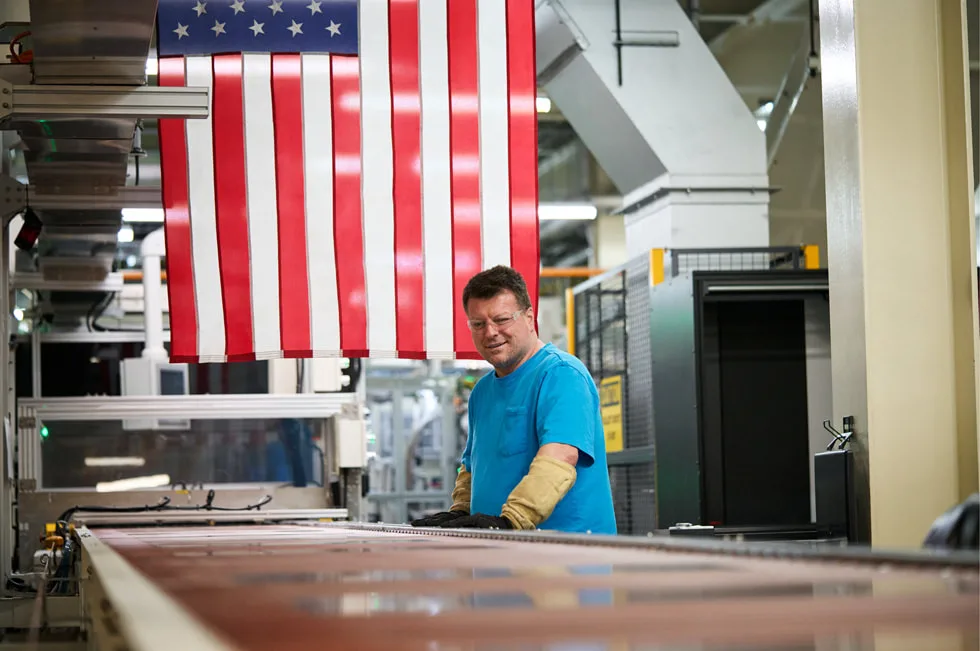
Apple’s American Manufacturing Program is a core element of the company’s $600 billion, four-year commitment to U.S. manufacturing and innovation.
The program focuses on:
Expanding domestic semiconductor and advanced materials production
- Strengthening resilient U.S.-based supply chains
- Supporting advanced manufacturing capabilities
- Creating high-value manufacturing jobs
Existing AMP partners already include major semiconductor and materials manufacturers such as Amkor Technology, Applied Materials, Broadcom, Coherent Corp., Corning, GlobalFoundries, GlobalWafers, MP Materials, Samsung Electronics, and Texas Instruments.
These collaborations are aimed at scaling advanced manufacturing capacity within the United States while reducing reliance on overseas supply chains.
TDK to Manufacture Advanced Sensors for Apple in the U.S.
As part of the expanded program, longtime Apple supplier TDK Corporation will manufacture sensors for Apple in the United States for the first time.
The companies have worked together for more than 30 years on sensor technologies, including tunnel magnetoresistance (TMR) sensors, which play a critical role in features such as camera stabilization in iPhone devices.
“Based on the decade-long relationship with Apple, when Apple asked what more we could do in the United States beyond our existing relationship, we TDK saw that as an opportunity to grow our relationship even more, and in new ways,” said TDK President and CEO Noboru Saito.
“We are very proud to be working with Apple to accelerate US manufacturing. We share their commitment to do more in the US, and our teams are working side-by-side with theirs in the US.”
The new U.S.-based production facility will supply sensors used in Apple products shipped globally and will increase the number of chips sourced from U.S. silicon supply chains.
For manufacturers, this marks another step toward localizing advanced sensor production within North America.
Apple, Bosch and TSMC Partner on U.S. Semiconductor Production
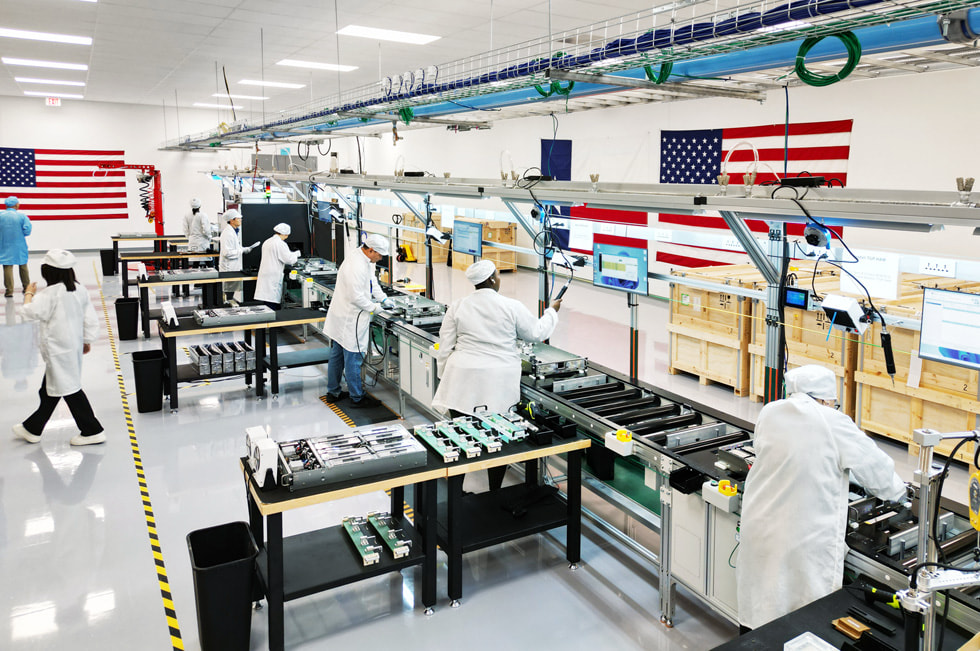
Apple is also collaborating with Bosch and TSMC to produce integrated circuits for Bosch sensing hardware.
Production will take place at TSMC’s semiconductor facility in Camas, Washington, enabling domestic manufacturing of critical ICs used in Apple devices.
These components enable features such as:
- Crash Detection
- Activity tracking
- Elevation sensing
The partnership represents another example of high-value semiconductor manufacturing returning to U.S. facilities.
Cirrus Logic and GlobalFoundries Advance U.S. Semiconductor Process Technology
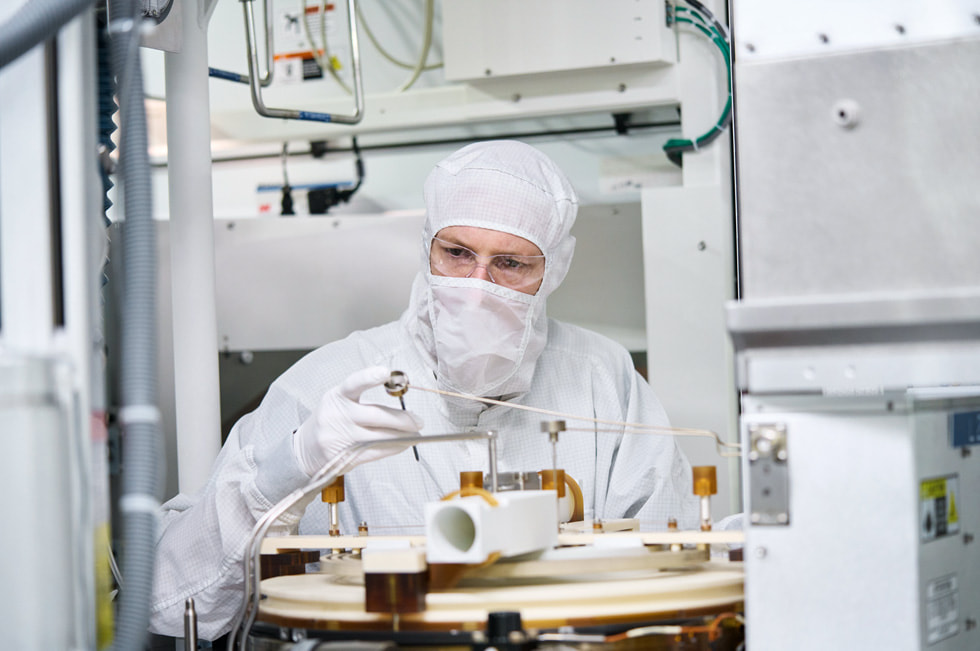
Apple is working with Cirrus Logic and GlobalFoundries to establish new semiconductor process technologies at GlobalFoundries’ fabrication facility in Malta, New York.
The new silicon process technology will be available in the United States for the first time, enabling Cirrus Logic to develop advanced mixed-signal integrated circuits used in multiple Apple applications.
One key area of development includes ICs designed to power Face ID systems, which require precise sensor and signal-processing capabilities.
For semiconductor manufacturers, the collaboration underscores the growing importance of domestic fabrication capacity for advanced device architectures.
Advanced Materials Collaboration Targets AI and High-Performance Computing
Apple will also collaborate with Qnity Electronics and HD MicroSystems to develop advanced materials used in semiconductor manufacturing and next-generation electronics.
The partnership will focus on:
- Materials for advanced chip fabrication
- Technologies supporting AI infrastructure
- Components enabling high-performance computing
These efforts aim to strengthen U.S. leadership in advanced semiconductor materials and electronic manufacturing.
Apple Manufacturing Academy Supports U.S. Small and Mid-Sized Manufacturers
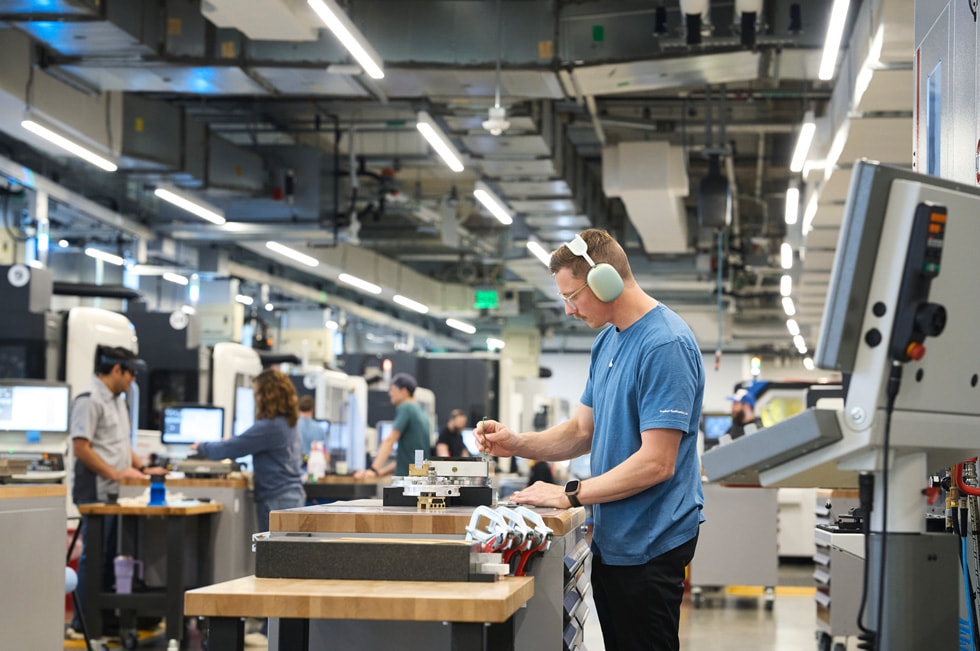
Beyond supply chain investments, Apple is also supporting workforce development through the Apple Manufacturing Academy, launched in Detroit last year.
The initiative provides hands-on training for small and mid-sized manufacturers in areas including:
- Artificial intelligence
- Industrial automation
- Smart manufacturing technologies
Since its launch, the academy has already supported nearly 150 businesses through a combination of in-person workshops and virtual programs.
Why Apple’s Manufacturing Strategy Matters for U.S. Industry
For the manufacturing sector, Apple’s expanded American Manufacturing Program highlights several broader industry trends:
- Reshoring of advanced semiconductor production
- Strategic supply chain localization
- Growing demand for advanced materials and sensors
- Increased collaboration between technology companies and manufacturers