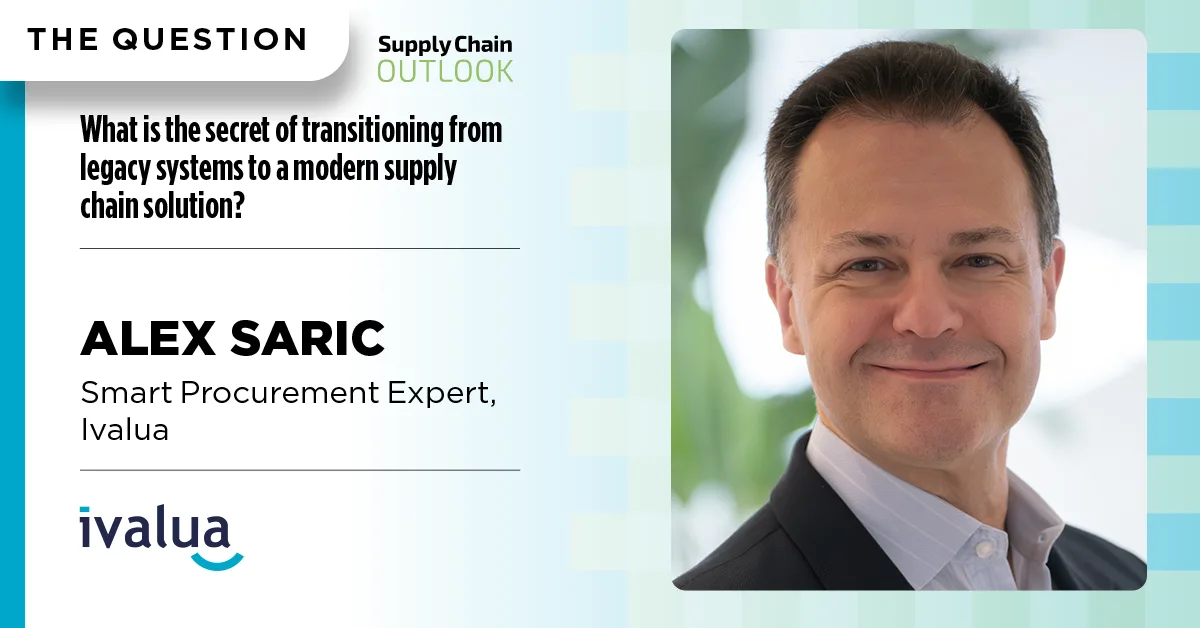





The secret is treating the shift as a true business transformation rather than a like-for-like technology replacement. The risk is trying to recreate outdated processes in a new system, ending up with the same limitations wrapped in a modern interface.
The reason this matters so much more now is AI. What truly differentiates a modern solution is the ability to unify your data and embed AI across supply chain processes, and that’s exactly what legacy systems can’t do. Businesses should start by getting the data right. An AI agent working from fragmented supplier data won’t just give you a bad answer – it could approve the wrong purchase or miss a compliance risk entirely.
When moving to a modern solution, carefully reassess your processes, gathering detailed input across supply chain and other business users to determine how things should work, questioning past processes. Develop a robust plan for both user and supplier adoption as both are essential and often skimped in timelines and resourcing.
With AI so critical to the most transformational benefits of new technology, carefully assess both AI capabilities as well as the foundation of technology options to avoid unpleasant surprises that delay or limit return on investment (ROI).
Alex Saric
Smart Procurement Expert at Ivalua
The Question is a thought leadership series published on Supply Chain Outlook, created to explore the questions shaping global logistics, procurement, transportation, and supply networks.
This edition of The Question is sponsored by Syspro.
Supply Chain Outlook features leadership insights and company stories from organisations helping to move, manage, and transform the flow of goods, services, and information around the world.
Produced as part of the Outlook Publishing global network of B2B industry magazines, The Question brings focused executive insight to audiences engaged with the people, technologies, and decisions shaping the future of supply chain.