



Many businesses still rely on supply chain systems designed for a very different world. In fact, our recent research found the average warehouse or inventory management system in use today was last upgraded nearly six years ago.
The key to a smooth transition from a legacy system to a modern supply chain is keeping people at the heart of the process. Modernisation should be about enhancing workers, not replacing them, giving warehouse teams better visibility, better data, and stronger decision-making tools.
This is especially important when it comes to AI. It has huge potential to transform warehouse efficiency, but it needs to be implemented intentionally and responsibly – that’s the secret to making sure it works. The focus should always be on measurable outcomes, whether that’s keeping shelves stocked, reducing inefficiencies, or improving customer service.
What many organisations also underestimate is that the transition itself can unlock value beyond efficiency gains. Reinvesting savings from tackling operational inefficiency into sustainability initiatives or further innovation projects is a powerful way to bring stakeholders on the journey that takes the warehouse from a cost centre into a genuine strategic advantage for the business.
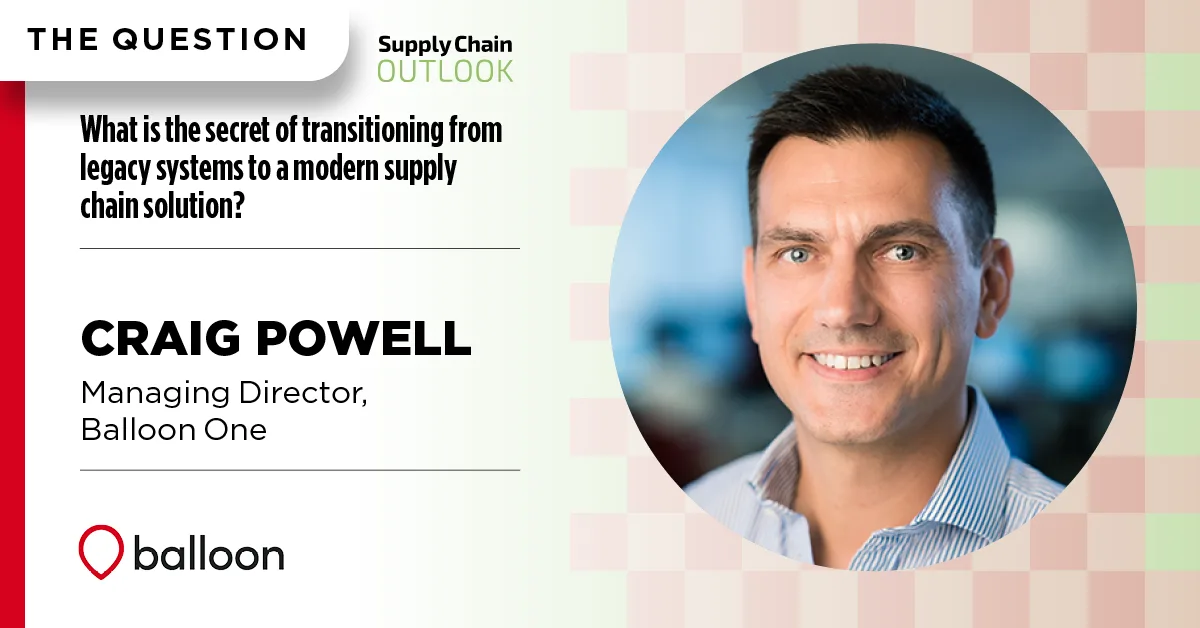
Craig Powell
Managing Director, Balloon One
The Question is a thought leadership series published on Supply Chain Outlook, created to explore the questions shaping global logistics, procurement, transportation, and supply networks.
This edition of The Question is sponsored by Syspro.

Supply Chain Outlook features leadership insights and company stories from organisations helping to move, manage, and transform the flow of goods, services, and information around the world.
Produced as part of the Outlook Publishing global network of B2B industry magazines, The Question brings focused executive insight to audiences engaged with the people, technologies, and decisions shaping the future of supply chain.