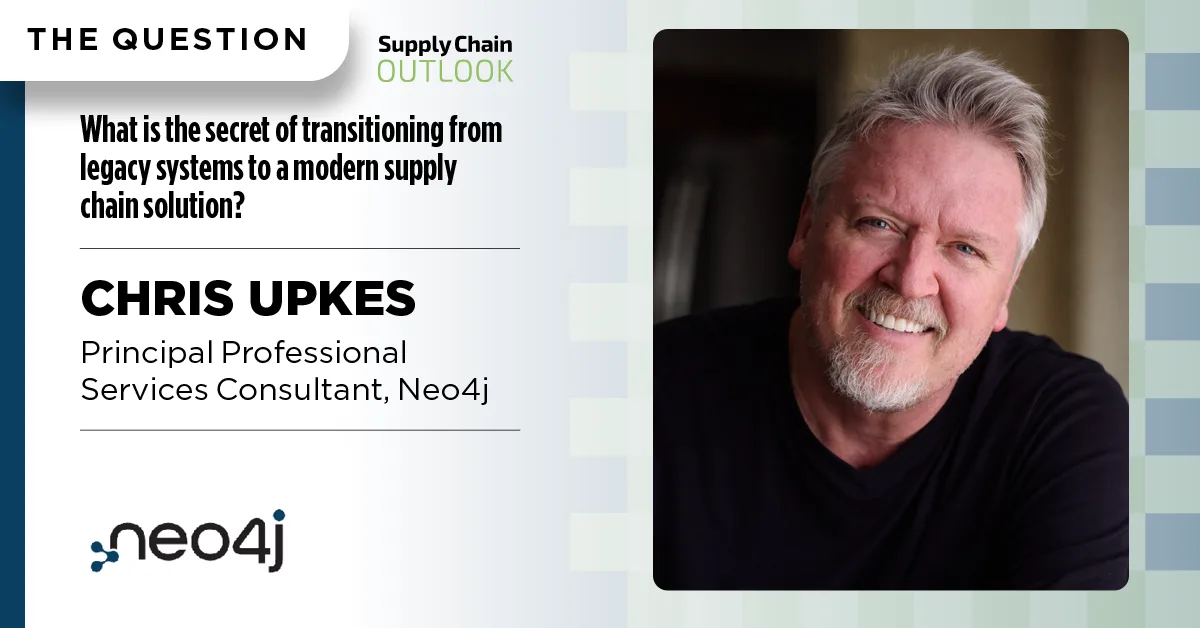




There is no ‘secret sauce’ to supply chain modernisation, but it is imperative that organisations understand and mitigate the ripple effects of transformation on their operational data. During the COVID-19 pandemic, when stakeholders felt the full brunt of disruption, too many made the mistake of focusing on overhauling the tech without first understanding how this may lead to wider collateral damage. As they could only estimate the impact, this created unintended consequences across supplier, logistical, and operational networks.
This decision-making was not aided by legacy manufacturing systems either. They provide rich functionality within a specific operational domain, but they tend to provide deep insight rather than broad. This means they rarely capture the cross-functional relationships required to understand how decisions, such as rerouting ships or changing suppliers, can create downstream effects elsewhere in the chain.
Modern systems provide a connected data view which allows businesses to identify critical dependencies or hidden vulnerabilities and make informed decisions without excessive or unnecessary disruption elsewhere in the chain. By unifying data and providing context around how assets, suppliers, and operations interact across the supply chain, organisations can move beyond reactive firefighting to predictive decision-making.
Clearly, the lesson is that businesses are not impeded by a lack of optimisation, but they lack a complete picture of the dependencies that connect suppliers, operations, and logistics networks. Supply chain resilience cannot be achieved through upgrading individual functions in isolation – they need to thread it all together to understand how decisions will influence the wider supply chain whilst mitigating future disruptions.
Chris Upkes
Principal Professional Services Consultant, Neo4j
About Chris Upkes
Chris Upkes is a Principal Professional Services Consultant at Neo4j, helping organisations leverage graph technology to solve complex business challenges across a range of industries.
About Neo4j
Neo4j is a graph database and analytics leader uncovering hidden relationships and patterns across billions of data connections to solve the world’s most pressing problems.
The Question is a thought leadership series published on Supply Chain Outlook, created to explore the questions shaping global logistics, procurement, transportation, and supply networks.
This edition of The Question is sponsored by Syspro.
Supply Chain Outlook features leadership insights and company stories from organisations helping to move, manage, and transform the flow of goods, services, and information around the world.
Produced as part of the Outlook Publishing global network of B2B industry magazines, The Question brings focused executive insight to audiences engaged with the people, technologies, and decisions shaping the future of supply chain.